Liszt's 1844 Concert Tour
End of April 1844, Liszt and Countess Marie d’Agoult separated for good. The relationship had been sour for quite some time, primarily because of (alleged) affairs of Liszt with other women. For sure, there was no shortage of female admirers of Liszt at the height of his pianistic career. If there was any shyness left in him from his days of teaching Countess Caroline de Saint-Cricq it was well disguised.
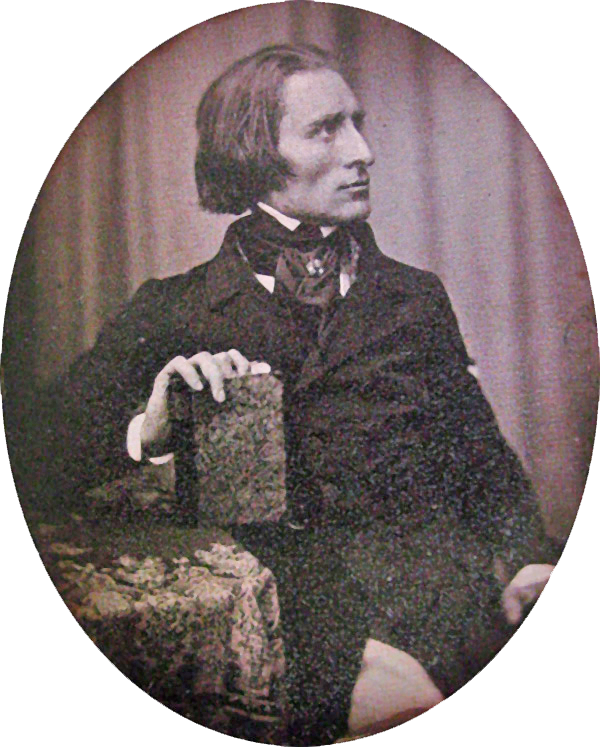
Franz Liszt in 1844
(early Daguerrotype)
It was Princess Cristina di Belgiojoso (“the Viper”, according to Marie d’Agoult) who comforted Liszt at her villa in Port-Marly [1] (on a river bend of the Seine near Versailles) for over a month in May/June. At the age of only thirty-two Liszt was suffering from rheumatic pains. Certainly his 1843 extensive concert tour into Germany, Poland and Russia must have left some mark on his health.
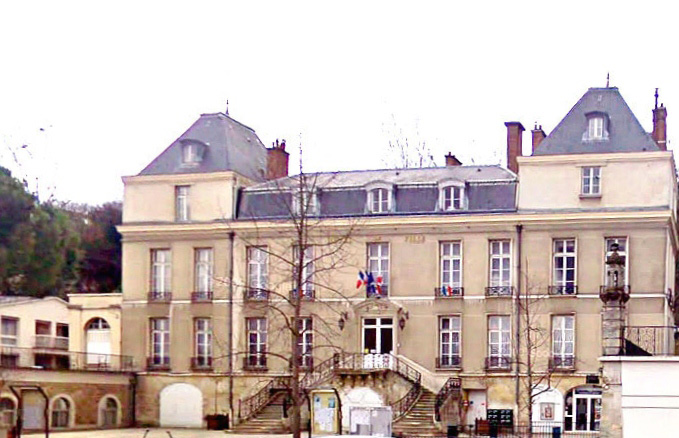
Villa at Port-Marly, presently town-hall
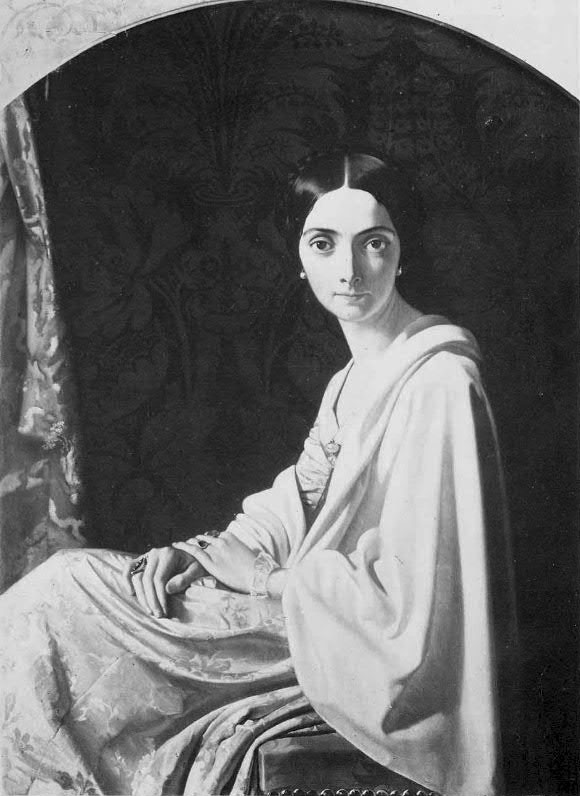
Princess Cristina di Belgiojoso (Lehmann, 1843)
From Port-Marly he travelled to Lyon to start his 1844 concert tour of the Mediterranean, Pyrenees, Spain and Portugal. Between Paris and the Spanish border Liszt gave over thirty concerts [2] not including dozens of charity and private events.
Liszt arrived in Lyon on June 29 and gave several concerts. On July 17 he left for Saint-Point, a small town west of Macon, where he stayed with his friend Alphonse de Lamartine. Lamartine’s pretty niece Valentine de Cessiat was also there, to whom (according to the gossip journals) Liszt proposed the following year. The Academy member Lamartine had been an admirer of Jasmin for many years and described him as “the truest and most original of modern poets”.
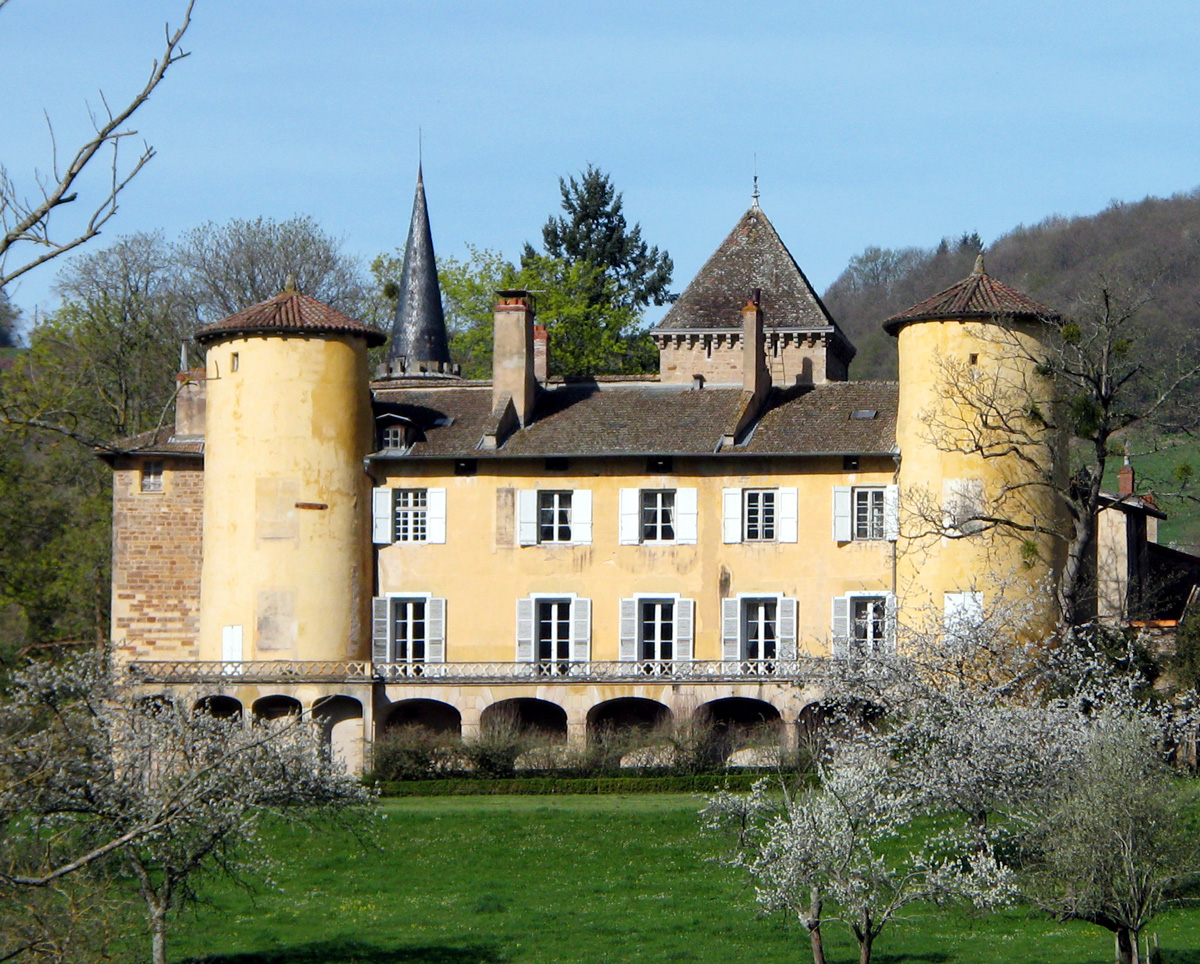
Château Lamartine, Saint-Point
After his concerts in Lyon (Site A on map below), and his stay with Lamartine at Saint-Point(B), Liszt travelled to Marseille(C) via Avignon.
From Marseille he made a detour to Toulon(D), returning to Marseille and continuing to Nîmes(E), Montpellier(F), Sète(G) (a detour from Montpellier), and Béziers(H). After Béziers, Liszt travelled inland to stay several days near Albi(I) at the Chateau Saliès belonging to Count Charles d’Aragon. The stay had been arranged by the half-sister of the Count Charles’ wife Teresa: Princess Cristina di Belgiojoso.
Next stops for concerts were Toulouse(J), Montauban(K)(a detour from Toulouse), and Bordeaux(L). From Bordeaux he travelled halfway back for his concerts in Agen(M), returning to Bordeaux for more concerts and two detours to Angoulême(N) and Libourne(O). For the final stretch of the French part of his tour he traveled to Pau(P), but he wouldn’t be Liszt if he didn’t use some spare time at Pau between concerts to make a detour to Bayonne(Q). From Pau he eventually continued his travels to the Iberian Peninsula [3] (again via Bayonne).
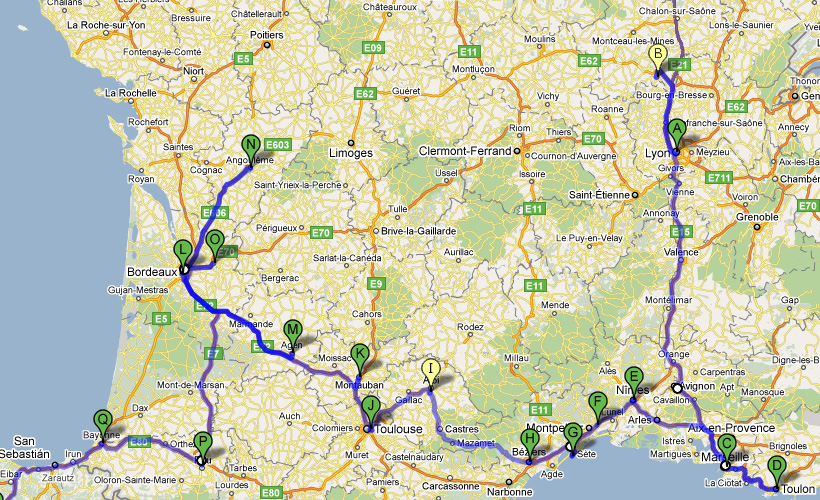
Map showing the cities in the south of France that Liszt visited [4]
September 1844: Liszt and Jasmin meet at Agen
The most famous piano player and the most famous barber-poet finally met at the concerts that Liszt gave [5] on Friday Sept. 20 and Sunday Sept. 22nd in the Place Royale theatre in Jasmin’s hometown Agen. Hearing about Liszt’s planned concert tour of the South, Jasmin had asked Liszt in a letter to do him the great honor of performing in his hometown.
As usual, the theatre was completely sold out and Liszt was late.
As an encore to the concert on Sept. 20, Liszt improvised on Jasmin’s song (Siren with the heart of ice / Faribolo Pastour) from the poem Franconnette. The Mémorial Agenois wrote: “Every time a new embroidering started on this naïve and freshly original theme, it made one forget the previous one, over which we had just exhausted our expressions of enthusiasm.”
After Liszt’s improvisation, Jasmin stood up and recited a poem for Liszt [6]. It is included in Jasmin’s third bundle of Papillotes [7]. He recited it in his local patois, which must have been difficult to comprehend for this “child of Germany” as the locals referred to Liszt.
|
A LISTZ En li jetan dios courounos |
To LISTZ [8] To whom I have thrown two crowns |
|
Hôme de fèt, hôme de brâzo, |
Man of fire, man of embers. |
|
Oh ! bou Diou ! qué sès fort ! |
Oh! Dear God! How strong you are! |
|
Lous poètos, de glôrio an set ; |
The poets, thirsty for glory; |
|
Per jou, cantayre de las prâdos, |
For me, a singer of the plains, |
While reciting these final lines of his poem Jasmin threw Liszt two crowns. Next, a rain of flowers came down on Liszt from the excited ladies in the audience. Thundering applause followed when Liszt picked one rose from a bouquet and gallantly put it in the button-hole of his lapel.
According to the local press, Liszt was considered irresistible by his female admirers and did not offer much resistance if they persisted.
The next day, Jasmin organized a banquet in Liszt’s honor with a performance by the Agen Philharmonic Society. Liszt responded by announcing a charity concert for the poor on Sunday Sept. 22nd at the Prefecture and donated a gold piece to the collection box.
Next: Liszt meets Caroline in Pau
[1][↑] La Mara, op. cit. 63, letter 38. The villa is presently in use as town hall of Port-Marly.
[2][↑] See for details: Léon-Bérard, op. cit. 4, p. 689; Fabre, op. cit. 100, p. 108; Jacques Chailly, “Documents relatifs aux preludes de Liszt”, Actes de Colloque International La Revue Musicale, Paris, Oct. 1986, p 312 ; Dufetel, Haine, Franz Liszt, un saltimbanque en province, Lyon, Symétry, 2007 (extensive overview of Liszt’s concerts including contributions by e.g. Bellas, Eckhardt, and Gut); Mémorial des Pyrénées, 30e Année, Sept. 17 – Oct.19, 1844.
[3][↑] Further details on Liszt’s tour through the Iberian Peninsula can be found in Antonio Simón’s article in this same journal.
[4][↑] Alphabetical letters indicate progress of Liszt’s tour, starting at Lyon. Dark/green labels indicate towns where he gave one or several concerts, light/yellow labels indicate stops without public concerts (© Google Maps 2011).
[5][↑] Fernand Mombet, Liszt à Agen, Revue de L’Agenais, Vol. 100, J.Owen, Nérac, 1974, p.123, and: Williams, A portrait of Liszt: by himself and his contemporaries, Clarendon, 1990, p. 208.
[6][↑] Mémorial des Pyrénées, Sept. 25, 1844 (partial reprint from review Mémorial Agenois of Sept. 21, 1844).
[7][↑] Jacques Jasmin, Las Papillotos 1843 – 1851, Tome Troisième, Agen, Firmin Didot, 1851, p. 23.
[8][↑] Author is indebted to Mr. Jean Lafitte, of l’Institut Béarnais et Gascon for his translation from the languedocien d’Agen to French (English translation by author). The title has the common French spelling mistake of referring to “Listz” in the header of the poem and to “Lits” in the index.